Best DORA Software: Top Solutions Compared (2026)

You have a DORA deadline behind you, but the real work has only started. Your compliance team still has spreadsheets from procurement, vendor records from IT, contract data in legal folders, and reporting expectations from management that keep getting more detailed. On paper, you may already be “compliant.” In practice, proving that your institution can maintain a clean Register of Information, support ICT risk decisions, and respond to regulator questions without weeks of cleanup is a different challenge.
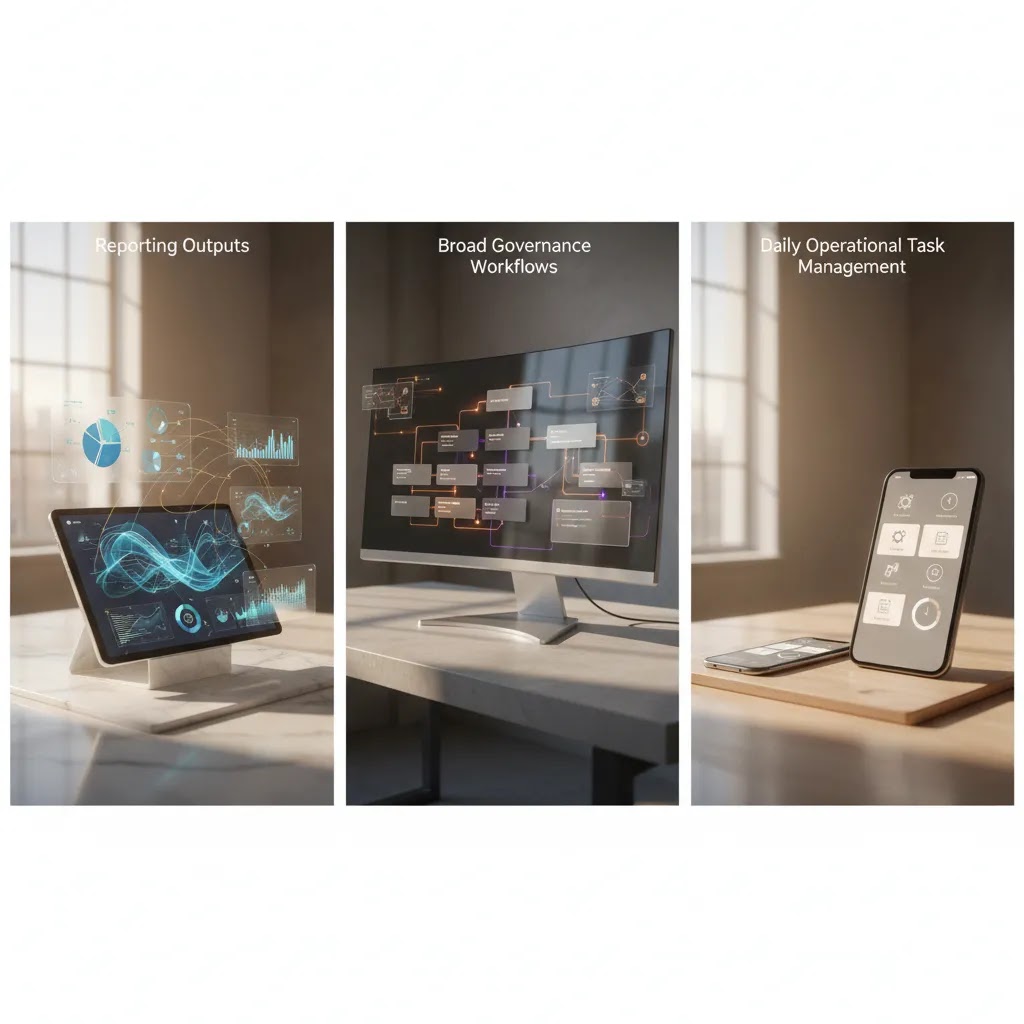
That is why choosing the right dora software matters in 2026. The market is crowded, and many tools sound similar until you look at the details. Some focus on reporting output. Some are broad GRC systems adapted for DORA. Some support day-to-day workflows better than others. This article compares the main solution types, explains what to look for, and helps you decide what kind of dora compliance tool may actually fit your institution. If you need a refresher on what is dora, start there first.
Why your software choice matters more in 2026
The first DORA implementation wave was mostly about getting ready by 17 January 2025. The second phase is different. Supervisors now expect proof that your controls, records, and governance processes work on an ongoing basis, not just near a filing deadline.
From a regulatory standpoint, this means your software has to support repeatable operations. That includes maintaining the Register of Information, supporting ICT third-party oversight, organizing evidence, and preparing outputs in the right structure. If you still rely on fragmented manual processes, the strain usually shows up when data changes, ownership is unclear, or a regulator asks how a record was validated and approved.
It also matters because DORA is not a single spreadsheet exercise. It sits across ICT risk management, incident reporting, resilience testing, third-party risk, and information sharing. If you need a broader regulatory foundation, Dorapp’s dora regulation explained article and overview of the digital operational resilience act dora can help frame the wider picture.
Consider this, a tool that only produces a final file may solve one immediate pain point, but it may not solve your ongoing governance problem. In 2026, that tradeoff matters much more than it did during initial readiness projects.
The main types of DORA tools on the market
1. Broad enterprise GRC platforms
These platforms are usually attractive if your institution already runs a large governance, risk, and compliance stack. They may offer flexibility, workflow capability, and internal integration options. The downside is that DORA can become just one use case inside a much larger system, which often means more configuration work, longer implementation cycles, and heavier internal ownership.
For some institutions, that is acceptable. For others, it creates too much overhead for a regulation that needs speed, precision, and reporting discipline.
2. Reporting-focused regulatory tools
These dora tools are strongest when your main concern is structured output, especially for technical submissions. They may help with data formatting and file generation, but they are not always built for year-round operational governance. If your team’s real pain is messy ownership, weak data quality, or poor traceability, reporting alone may not be enough.
3. Niche DORA-specific platforms
This category tends to fit institutions that want a more direct path. These tools are built around DORA use cases rather than adapting a broader system later. In many cases, they offer stronger support for the Register of Information, ICT third-party data, workflow controls, and DORA-specific reporting structures.
The main question here is depth. Some niche vendors are good at one pillar but lighter in others. You need to check whether the platform supports your current priority and your likely next steps.
4. Internal builds and spreadsheet-led hybrids
Many teams still use Excel, scripts, shared folders, and internal workflow tools. This may work for smaller institutions or early-stage programs, especially where internal expertise is strong. The reality is that these setups often become fragile as validations, approvals, and cross-functional dependencies increase.
If your team spends too much time cleaning data before every review cycle, your system may be costing more than it appears.

What good DORA software should actually help you do
When you compare vendors, it helps to ignore marketing labels for a moment and focus on practical outcomes. A useful dora compliance tool should reduce friction in the work your teams already have to do.
Support Register of Information operations
The Register of Information is still one of the clearest test cases. Your software should help you import, organize, validate, update, and export records without turning every reporting cycle into a cleanup project. That is especially important because the first ROI submission deadline was 30 April 2025, and regulators are expected to keep checking consistency across cycles.
If this area is still fuzzy internally, the Register of Information category and Dorapp’s guidance on xbrl are worth reviewing.
The reality is, ROI work is also where third-party governance becomes visible. It is not only about listing providers. In most institutions, the hard part is keeping relationships current as services evolve, contracts renew, and dependency chains change. Tools that help you discover and classify ICT providers, including relevant subcontractors where feasible, often reduce late surprises and repetitive re-validation work.
From a practical standpoint, you typically want more than a vendor name and a contract date. You want tiering by criticality, clear mapping between the provider and the services it supports, and ownership that survives team changes. If your institution needs to review concentration risk, you also want to see how the software supports grouping, aggregation, and governance reporting, without forcing you into a manual spreadsheet exercise every quarter.
Now, when it comes to monitoring and change tracking, expectations can vary by regulator and by the way your group is structured. Still, many institutions are moving toward clearer evidence of follow-up: who was alerted to a change, who reassessed the risk, what decision was taken, and when. Not every platform truly supports this end-to-end, so it is worth checking what is actually captured and what remains an offline process.
In a demo, ask the vendor to show how the tool links services, entities, contracts, locations, and provider dependencies. Ask how they handle one-to-many relationships, shared services across entities, and differences between a contracting entity and a benefiting entity. If the demo cannot show provider dependency mapping or a credible way to keep it up to date, your ROI may look fine, but your third-party story may still be weak.
Improve data quality before reporting
What many people overlook is that filing issues often start long before export. Poor legal entity identifiers, inconsistent provider names, duplicate records, and weak ownership create submission risk later. Better tools help you detect those issues early, not only at the end.
Handle workflows across teams
DORA work does not sit in one department. Compliance, risk, IT, procurement, legal, and business owners all contribute data or approvals. Good software should reflect that reality with role-based workflows, review gates, and a usable audit trail.
Prepare technical outputs without making compliance teams act like developers
DORA reporting increasingly depends on structured output formats. Your team should not need to become data engineers just to produce an acceptable report. This becomes even more important if your institution operates across multiple entities or jurisdictions.
Grow from one pain point to a wider control framework
Some institutions begin with reporting, others with ICT third-party governance, and others with incident processes. A good tool should let you start where the pain is and expand later. That matters if you are also building your ict risk management framework dora and broader ict risk dora processes at the same time.
DORA tool coverage by pillar, so you do not buy blind spots
One of the easiest ways to buy the wrong dora software is to assume that “DORA-ready” means full coverage. In practice, many tools are strong in one or two areas and lighter elsewhere. That is not automatically a problem, but you should know your blind spots before you commit.
Think of it this way, DORA spans five pillars, and software support looks different in each one. Here is how those pillars typically map to capabilities you can actually test.
ICT risk management (governance and controls)
Software support here often includes risk registers, control libraries, policy mapping, ownership, and approval workflows. The coverage check is whether the platform can link risks and controls to the services and ICT assets that matter operationally, not only to a policy document. If your tool cannot connect governance to real systems and services, you may end up with a tidy framework that is hard to defend during questions.
ICT-related incident management and reporting
Tools in this area may offer incident intake, classification, timelines, internal escalation, and reporting preparation. A practical check is whether the software captures the full record history: who classified the incident, what changed, who approved the final report, and what evidence supports the decisions. If your incident workflow lives in one system and your reporting record lives in another, you can lose traceability fast.
Digital operational resilience testing
Testing support typically covers planning, scope, test execution tracking, findings, remediation ownership, and sign-off. What to verify is how the tool handles evidence and exceptions. Can you attach proof, track remediation through to closure, and show decision points over time? If your institution is subject to more advanced testing expectations, you should also check how the platform supports structured governance and reporting around that program, and align details with your internal risk and compliance teams.
ICT third-party risk management
This is where many institutions feel the day-to-day pain: provider inventories, service dependency mapping, contract attributes, criticality tiering, concentration risk review, and keeping records current. A good coverage check is whether the platform can represent real relationships across entities and services, including where subcontractors are relevant and discoverable, and whether it supports reassessments with evidence of follow-up.
Information and intelligence sharing
Software support here is often lighter and more process-driven. You may see features for tracking intake of threat information, internal distribution, actions taken, and governance around what was shared and why. The practical test is whether you can show a repeatable process and evidence trail without turning it into a manual email archive.
Now, here are a few coverage checks that tend to reveal gaps quickly during evaluation:
For most small business owners and entrepreneurs, phased adoption is normal. The same logic applies here. Many institutions start where the ROI pressure is highest, often Register of Information operations and third-party data quality, then expand into workflows, evidence management, and broader governance. Just keep your scope explicit. Regulator expectations can vary by jurisdiction, and group structures can change what “good enough” looks like, so it helps to agree internally on what you will operationalize first and what comes next.
How to compare solutions without getting distracted
Here’s the thing, most buying mistakes happen because teams compare surface features instead of operational fit. A polished demo matters far less than how the platform behaves once real data, real owners, and real deadlines enter the picture.
Use these comparison criteria
Questions worth asking in a demo
Ask the vendor to show a realistic workflow, not just a dashboard. Can they import messy source data? Can they validate and enrich records? Can they show what changed, who approved it, and how the final reporting file is produced? Can a non-technical compliance user actually operate the process?
For institutions still building internal understanding, the DORA Fundamentals category and the post DORA Pillars Explained: Complete Breakdown (2026) provide useful context before vendor meetings.
What many people overlook is the difference between something that looks good on screen and something that is defensible under questioning. A dashboard can be helpful, but “audit readiness” usually comes from traceable reporting: source records, owners, approvals, timestamps, and a clear change history that explains why the data looks the way it does.
Competitor tools often emphasize repeatable outputs, not only one-off submissions. In practice, that can mean downloadable evidence packs, consistent management reports, an audit trail that is easy to follow, and exports that you can reproduce on demand. For Register of Information work in particular, exportability tends to matter more than people expect, including the ability to produce structured outputs such as XBRL where applicable.
If you want output quality to be more than a promise, use output-focused demo prompts like these:
The difference often comes down to whether the platform can produce a result once, or whether it can produce the same result again next month, with evidence that holds up across cycles.
Where DORApp fits in the comparison
DORApp was built to simplify DORA compliance for EU financial institutions through a modular approach, turning complex requirements into more structured and manageable workflows. Based on Dorapp’s current product data, the platform includes modules for Register of Information and Third-Party Risk Management, with additional modules on the roadmap for incident management, ICT risk management and governance, and information and intelligence sharing.
From a practical standpoint, this means DORApp is positioned as a DORA-focused platform rather than a generic compliance system. Verified product information and documentation indicate strengths around the Register of Information process, including import workflows, automatic LEI validation and enrichment from public data sources, configurable reporting, audit trail support, and data conversion for DORA reporting outputs.
Its modular structure may appeal if you want to start with one pain point and expand over time. DORApp documentation also describes a workflow-driven approach with configurable review gates, sign-off support, analytics, and reporting. For BOFU readers who want to see whether that fits their institution, you can book a dora compliance demo, create your dorapp account, or run your dora roi health check.
Just as importantly, DORApp is honest about fit. Institutions already deeply committed to a large enterprise GRC stack, or those with a strong internal regtech engineering function, may still prefer another path. That kind of clarity usually makes a comparison more credible, not less.

Best-fit guidance by institution type
Smaller financial institutions
If your team is lean, specialized dora software usually makes more sense than a broad platform rollout. You likely need speed, usable workflows, and less dependency on internal development. A modular DORA-first approach may be easier to operationalize than a major transformation project.
Mid-sized institutions with growing complexity
This is often the most difficult segment. You may have enough complexity to outgrow spreadsheets, but not enough appetite for a heavy enterprise program. In that case, the best dora tools are usually those that combine structured reporting with controlled execution across departments.
Large groups and multinational entities
These organizations need stronger permissioning, entity separation, and consolidated oversight. The winning solution is rarely the cheapest or simplest looking one. It is the one that can maintain consistency across entities while preserving accountability and auditability.
Consulting-led delivery models
Some institutions rely heavily on external advisors for DORA execution. In those cases, software should support collaboration, evidence capture, repeatable workflows, and measurable service quality. DORApp’s documentation describes this as a service-oriented model rather than software for software’s sake, which may resonate if you want stronger execution discipline.
If you want more regulatory background before shortlisting vendors, the article DORA European Commission Timeline and History (2026) helps explain how the framework developed and why expectations continue to mature.
Disclaimer: The information in this article is intended for general informational and educational purposes only. It does not constitute professional technical, legal, financial, or regulatory advice. Platform capabilities, implementation outcomes, and compliance results will vary depending on your institution’s structure, data quality, governance model, and regulatory context. This article is for informational purposes only and does not constitute financial, legal, or regulatory advice. DORA compliance requirements may vary based on your institution type, size, and national regulatory framework. If you operate in a regulated sector, always consult qualified financial, legal, and compliance professionals for guidance specific to your situation.
Frequently Asked Questions
What is dora software, exactly?
Dora software is a tool or platform that helps financial institutions manage parts of their Digital Operational Resilience Act obligations. Depending on the product, that may include maintaining the Register of Information, organizing ICT third-party records, supporting workflows, preparing structured reports, or tracking evidence across teams. Not every product covers the same scope. Some focus mainly on reporting output, while others support ongoing governance and operations. The right definition is practical, it should help your institution do the work DORA requires with more consistency and less manual friction.
Do I need a dedicated DORA compliance tool if I already have a GRC platform?
Not always. If your existing GRC platform is already well configured, internally supported, and able to handle DORA-specific data structures and reporting needs, it may be enough. The challenge is that many broad platforms require significant customization before they fit DORA well. A dedicated dora compliance tool may be more efficient if you need faster rollout, stronger Register of Information support, or less internal build effort. The decision usually comes down to time, internal resources, and whether your current system can support real operational use, not just policy mapping.
What features matter most in DORA tools?
The most valuable features are usually the least flashy. Look for structured data management, workflow control, audit trail, validation logic, role-based access, and reporting readiness. If Register of Information quality is a pain point, import support and data enrichment matter a lot. If cross-functional coordination is the bigger issue, approval flows and ownership tracking become more important. Strong dora tools should make ongoing work easier, not just produce a file at the end. A useful test is simple, does the platform reduce cleanup, confusion, and rework across your teams?
What are the 4 key DORA metrics?
People use “DORA metrics” in two different ways, and that is where confusion starts. In software engineering, “DORA metrics” often refers to four delivery and reliability metrics used to assess DevOps performance: deployment frequency, lead time for changes, change failure rate, and time to restore service. That is separate from the EU Digital Operational Resilience Act.
For DORA regulation programs, institutions typically track a mix of operational resilience indicators such as incident volumes and severity, time to detect and recover, third-party remediation status, testing findings and closure rates, and Register of Information completeness and data quality. The exact set that matters most can vary by your regulator and operating model, so it is usually best to align metrics with your internal risk framework and supervisory expectations.
Is DORA a program run by Google Cloud?
No. DORA in this article refers to the EU Digital Operational Resilience Act, which is an EU regulatory framework. Some cloud providers and technology vendors may offer services or guidance that support resilience efforts, but they do not “run” DORA. If a vendor uses the DORA acronym in another context, make sure you confirm which meaning they are referring to.
Does DORA apply to software?
DORA applies to in-scope financial entities and certain ICT third-party service providers, not to “software” in the abstract. That said, software is often part of what institutions rely on to deliver critical or important functions. This often means you need to understand which applications, platforms, and service providers support key services, and make sure governance, resilience, and third-party oversight processes cover them appropriately. Scope details can vary by institution type and jurisdiction, so it is wise to validate interpretation with qualified legal and compliance professionals.
Is DORA better than WordPress?
They are not comparable. DORA is an EU regulation focused on digital operational resilience for financial entities, while WordPress is a website content management system. If you are seeing both terms in the same conversation, it is usually because “DORA” is being used to refer to something else, or because the discussion has mixed up different acronyms.
Is XBRL support essential for DORA software?
For many institutions, yes. DORA reporting at EU level uses XBRL-based submission formats, so software that can handle the technical conversion may save a lot of manual effort and reduce formatting risk. That does not mean every institution needs a standalone XBRL engine, but it does mean you should understand how your chosen tool gets from operational data to submission-ready output. If a vendor is vague on this point, ask them to show the process clearly. Technical output matters most when reporting deadlines and regulator acceptance are on the line.
Can small financial institutions still justify buying dora software?
Often, yes. Smaller institutions may not have large compliance teams or internal engineers, which makes manual approaches harder to sustain over time. A focused platform can reduce dependency on spreadsheets, improve record quality, and create a more repeatable process. That said, the business case depends on your complexity. If your third-party landscape is simple and your internal controls are mature, a lighter setup may still work. The question is less about size alone and more about whether your current process is stable, auditable, and realistic for ongoing regulator scrutiny.
How should I evaluate vendors during a demo?
Ask for realistic scenarios, not polished slides. Have the vendor show how they import source data, handle incomplete records, validate data quality, route approvals, and produce final outputs. Ask who typically owns the system internally and what onboarding looks like. If your institution has group structures or multiple entities, ask how they handle segregation and consolidation. A strong demo should show process discipline and usability, not just a dashboard. You want evidence that the tool works with the messy reality your teams face, not only with clean sample data.
Can DORApp replace all DORA compliance work?
No platform replaces the need for institutional ownership, expert judgment, or legal and compliance review. DORApp, like other specialized platforms, may support workflows, reporting preparation, data quality, and operational discipline. It does not remove the need to define governance, validate interpretations, or align with your regulator and institution-specific obligations. The best way to view software is as an enabler. It may reduce manual burden and improve consistency, but your people, controls, and decisions still matter most in any DORA program.
What is the biggest mistake institutions make when choosing a DORA tool?
A common mistake is buying for the filing deadline instead of buying for the operating model. Teams often choose whatever appears to generate a report fastest, then realize later that the real issue was weak data ownership, scattered evidence, or poor cross-functional coordination. Another mistake is assuming a large platform will automatically fit DORA well without heavy adaptation. The better approach is to start with your pain points, test realistic workflows, and choose a tool that supports the way your institution actually works throughout the year.
How does 2026 change the software decision?
In 2026, the emphasis has shifted from initial readiness to demonstrable resilience in ongoing operations. Supervisors are expected to look more closely at whether data stays current, controls are traceable, and records can support review across cycles. That makes workflow quality, auditability, and data governance more important than they may have seemed in earlier implementation phases. Software decisions now have a longer shadow. A tool that only helps at the point of submission may feel limiting once your institution needs stronger evidence, repeatability, and operational proof.
Key Takeaways
Conclusion
The best DORA software is not the one with the longest feature list. It is the one that fits your institution’s operating reality, your data quality challenges, and your need to prove control over time. Some institutions will be well served by a broader GRC environment. Others will benefit more from a DORA-specific platform that gets them from fragmented records to structured, auditable workflows faster.
If your team is comparing options now, focus on daily usability, ownership clarity, and reporting credibility. Those are the areas that usually determine whether a tool becomes part of real operations or just another layer around existing spreadsheets. DORApp is one platform worth exploring if you want a modular, DORA-focused approach with practical support for Register of Information work and reporting workflows. You can learn more through the DORA Fundamentals content hub, explore Dorapp’s perspective on implementation, or take the next step with a demo or trial if you want to see how the platform works in practice.
About the Author
Matevž Rostaher is Co-Founder and Product Owner of DORApp. He brings deep experience in building secure and compliant ICT solutions for the financial sector and is positioned by DORApp as an expert trusted by financial institutions on complex regulatory and operational challenges. DORApp’s own webinar materials list him as CEO and Co-Founder of Skupina Novum d.o.o. and CEO and Co-Founder of FJA OdaTeam d.o.o. His articles should carry the voice of someone who understands not just compliance requirements, but the systems and delivery realities behind them.